language
language
A diagnosis of a herniated disc often triggers great anxiety, yet research shows that the vast majority of herniated discs heal without surgery, and the pain can be treated effectively. At our practice in Zurich, we guide you back to a pain-free daily life using Liebscher & Bracht pain therapy and Winback Tecar therapy – several of our patients have avoided a scheduled surgery this way.
A herniated disc in the lumbar spine (lower back) typically manifests as severe back pain that can radiate into the buttocks or leg; in the cervical spine (neck), the pain radiates into the shoulder and arm. Coughing, sneezing, or certain movements often intensify the pain. It is important to know that many herniated discs cause no symptoms at all and are only discovered by chance.
In the event of paralysis, increasing numbness, numbness in the genital area, or bladder and bowel dysfunction, immediate medical evaluation is necessary – in these cases, medical intervention takes priority.
Intervertebral discs are subjected to one-sided strain over years: prolonged sitting with a rounded back compresses them into a wedge shape, while overstrained trunk muscles further increase the pressure on the spine. Eventually, the fibrous ring gives way – and the herniation occurs.
Crucial for treatment: The pain often stems less from the herniation itself than from the massively elevated muscular-fascial tension around the spine, which the body uses to protect the segment. If this tension is reduced, the pain often subsides significantly – and the pressure on the disc is relieved, allowing the natural healing process to proceed undisturbed.
With osteopressure, we reduce the protective tension in the back, hip, and trunk muscles – gently and adapted to the acute situation. The pressure on the affected spinal segment decreases, and the radiating pain subsides.
As soon as the symptoms allow, we incorporate targeted bottleneck stretches that straighten the spine, distribute pressure on the discs more evenly, and prevent a recurrence.
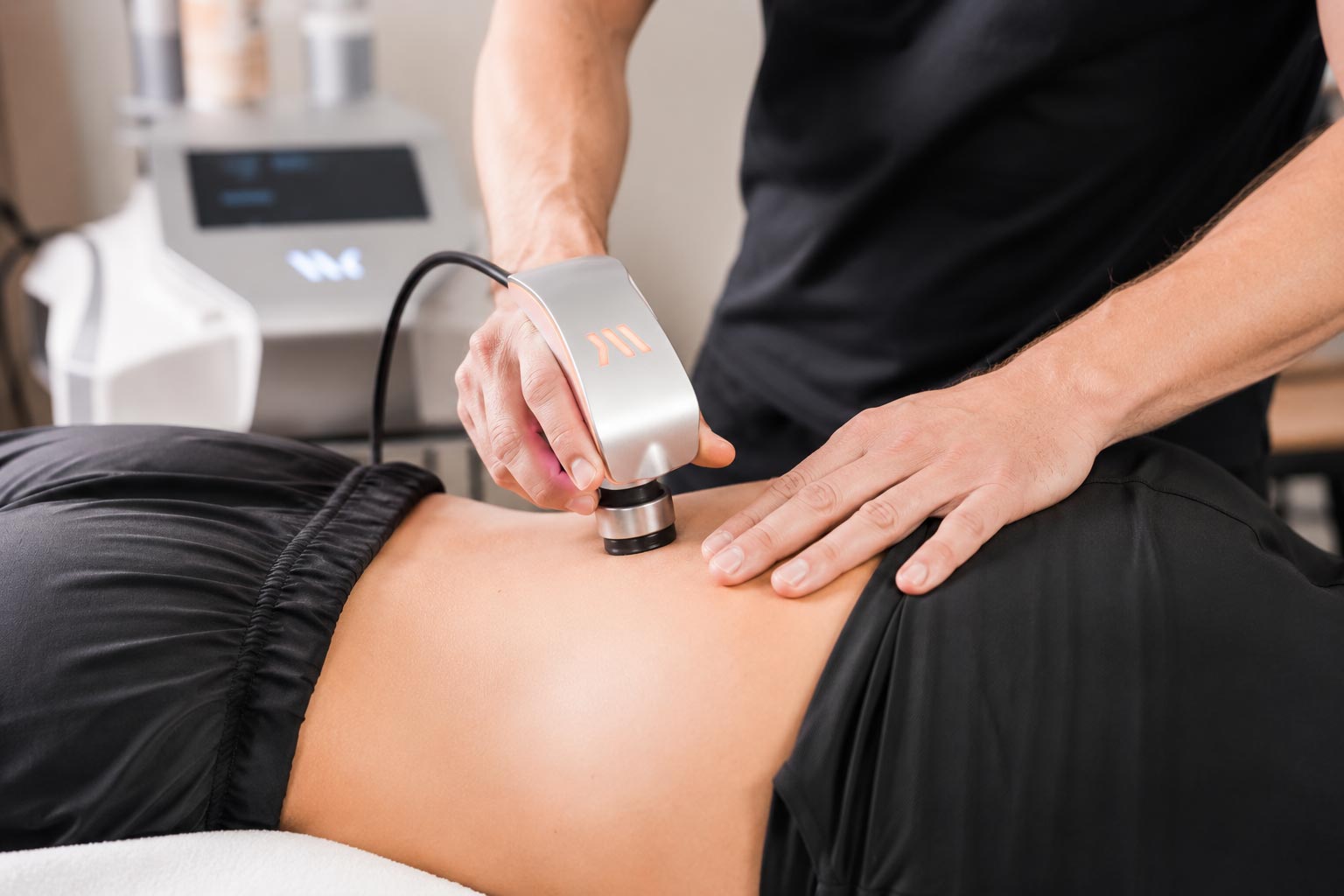
Winback Tecar deep heat supports the healing process: it relaxes the tightly strained muscles along the spine, promotes blood circulation and thus the supply of nutrients to the injured tissue, and soothes irritated structures – pain-free and comfortable even in the acute phase.
The combination – doubly effective: Deep heat gently releases protective tension, osteopressure reduces it at the source, and the exercises stabilize the results. This is how we create the conditions under which the body can heal the herniation itself – without surgery.
In the vast majority of cases, no. Studies show that the herniated tissue often regresses on its own. Surgery is generally only performed in cases of neurological deficits such as paralysis. The pain can be treated effectively with conservative methods.
This varies from person to person. Many patients report significant relief after just the first few treatments – complete healing of the herniation takes weeks to months, during which we will support you.
More than most people think: gentle movement promotes healing, while complete bed rest is often counterproductive. We will show you which movements and positions provide relief right now – and which ones you should avoid for the time being.